Arrests.org
Searching for public arrest and booking information online can be challenging when records are distributed across counties, cities, sheriff’s offices, police departments, and other law enforcement agencies. Arrests.org provides an online public database that can help users search available arrest and booking information by name and state.
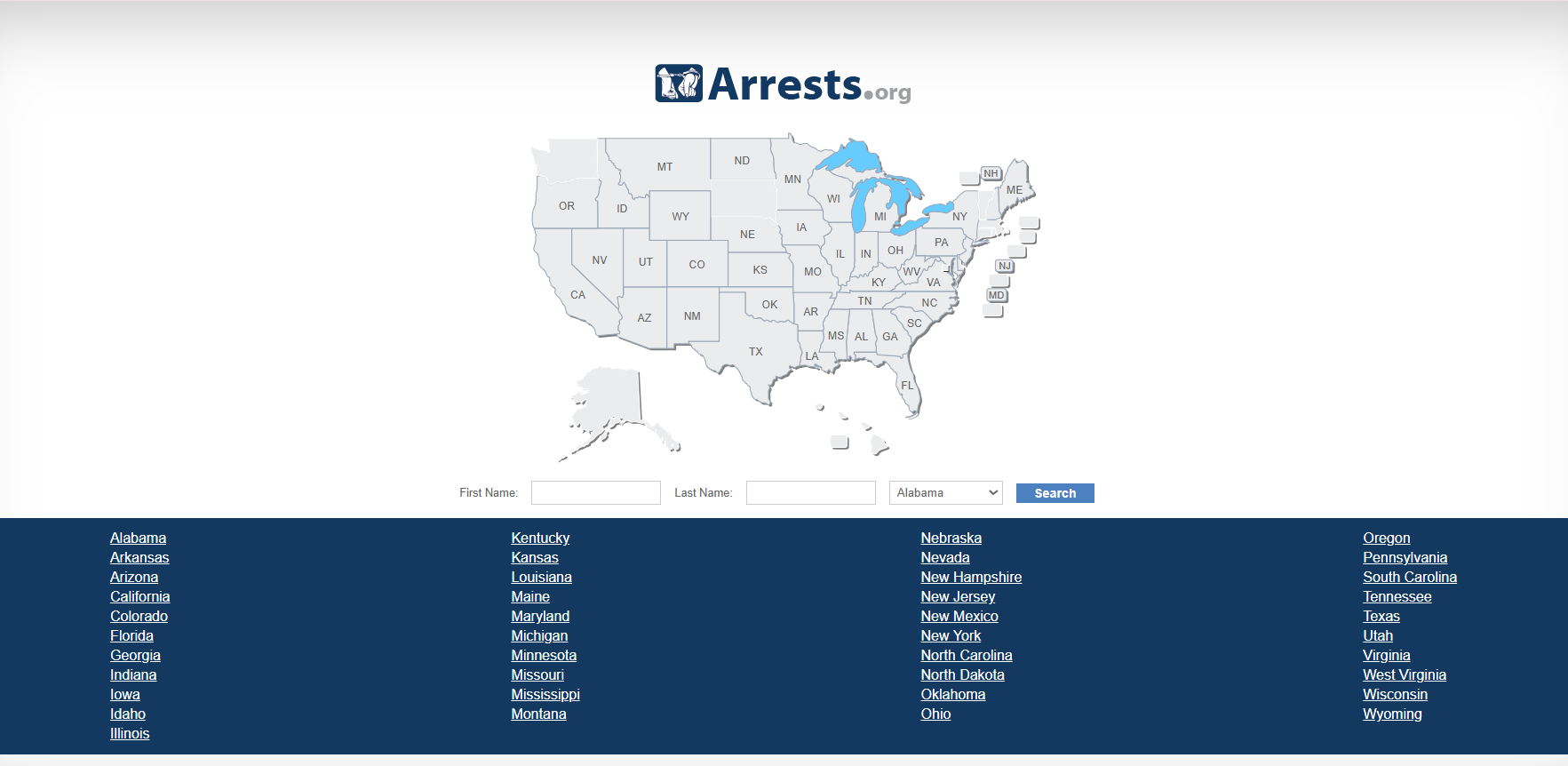
Arrests.org Public Database – Search Arrest Records
Whether you are searching for arrests.org, arrests org, arrests.org public database, or a state-specific phrase such as KY arrests.org, this guide explains how the database works, how to search arrest records, what information may be available, and how to verify records responsibly.
Arrests.org – Search Arrest Records
Public arrest information can be useful for locating a starting point when researching a record. However, information associated with an arrest should always be interpreted carefully. An arrest is not the same as a conviction, and an arrest record alone does not establish that a person committed a crime.
Important: An arrest record is not proof of guilt or a conviction. Individuals listed in arrest records are presumed innocent unless proven guilty through the appropriate legal process.
What Is Arrests.org?
Arrests.org is an online public-record search portal that provides access to available arrest and booking information from participating jurisdictions.
The platform is designed to make publicly available arrest information easier to search. Depending on the jurisdiction, users may be able to search records using a person’s first name, last name, state, county, or other available information.
The type of information displayed can vary considerably from one jurisdiction to another. Some records may provide basic booking details, while others may include additional information such as the arresting agency, listed charges, booking date, county, or location.
Because public-record systems differ between jurisdictions, an Arrests.org search should be viewed as a convenient starting point rather than automatically treated as a complete or final criminal-history record.
Arrests.org Public Database Search
The Arrests.org public database is intended to help users locate publicly available arrest and booking information online.
A typical record may contain some of the following information:
- First name
- Last name
- Arrest date
- Booking date
- County
- Location
- Arresting agency
- Listed charges
- Booking information
- Other publicly available record details
The exact information depends on the jurisdiction and the source records available to the database.
Some state-specific sections may also provide additional search filters. These can include county, age, sex, ZIP code, charge, or other available criteria.
Using additional information can make an Arrests.org search more useful, particularly when the person being researched has a common name.
How to Search Arrest Records on Arrests.org
Searching Arrests.org is generally straightforward when you have accurate identifying information.
1. Enter the First Name
Begin by entering the person’s first name into the available search field.
Use the correct spelling whenever possible. If the initial search does not produce relevant results, legitimate spelling variations may sometimes help identify an available record.
2. Enter the Last Name
Enter the person’s last name carefully.
A common first and last name combination can produce multiple results. Therefore, a matching name should never be considered sufficient by itself to identify a specific person.
3. Select the State
Choose the state where the arrest or booking may have occurred.
Selecting the correct state can significantly reduce unrelated results and make it easier to locate information associated with the appropriate jurisdiction.
4. Review the Search Results
Carefully examine the information shown in the results.
When available, compare:
- Full name
- County
- Location
- Booking date
- Arrest date
- Age
- Arresting agency
- Listed charges
- Other identifying information
The more details that match, the more useful the result may be as a potential record match.
5. Verify Important Information
If the information is relevant to an important legal, personal, employment, housing, or other significant decision, verify it through the appropriate official government or court source.
An online arrest listing may not contain the complete history or current status of a case.
Arrests.org Search by State
One of the most useful ways to narrow an Arrests.org search is to search by state.
State-specific searches can be helpful when you know where an arrest or booking occurred. Search phrases may include:
- KY arrests.org
- arrests org KY
- Kentucky arrests.org
- Florida arrests.org
- California arrests.org
- Georgia arrests.org
- Ohio arrests.org
- Texas arrests.org
These keyword variations reflect the way users may search for state-specific public arrest information.
The availability of records and search features can differ between states, counties, and law enforcement agencies. A record available in one jurisdiction may not be presented in exactly the same format as a record from another jurisdiction.
If you are searching arrests org records, always confirm that the state and county correspond to the location you are researching.
KY Arrests.org
KY arrests.org is a state-specific search phrase associated with Kentucky arrest and booking information.
When researching Kentucky records, county information can be especially useful because multiple individuals may have identical or similar names.
A search for arrests org KY should be reviewed carefully. Compare the person’s name, county, date, agency, and other available information before determining whether a result may correspond to the person being researched.
For legal, official, or current case-status information, Kentucky government and court resources should be used to verify the information.
Florida Arrests.org
Florida arrests.org searches can help users locate available Florida arrest and booking information.
Florida-specific pages may provide additional search options depending on the available jurisdictional information. Search filters can make it easier to narrow results when a person’s name is common.
When reviewing a Florida record, compare the person’s name, county, booking date, charge information, and other available details.
Users should remember that an arrest listing reflects information associated with an arrest or booking and does not by itself establish a final court outcome.
California Arrests.org
California arrests.org is another state-specific search variation for users looking for publicly available California arrest information.
California contains numerous counties, cities, and local law enforcement agencies. As a result, the type and availability of public arrest information can vary depending on the jurisdiction.
When reviewing a California record, pay attention to the location, county, date, agency, and other available identifying information.
Important information should be independently verified through the appropriate California government or court source.
Georgia Arrests.org
Georgia arrests.org searches can be used to look for available Georgia arrest and booking information.
County and agency information can be particularly helpful when several people share the same name.
When conducting a Georgia search, compare as many available details as possible. Do not rely solely on a name when attempting to determine whether an arrest record belongs to a particular individual.
Ohio Arrests.org
Ohio arrests.org searches provide another state-specific approach to locating available arrest and booking information.
County-level information can help narrow results when a person’s name is common.
As with other public-record searches, users should compare names, dates, locations, agencies, and other available information before treating a result as a potential match.
For important legal information, the appropriate Ohio government or court source should be consulted.
Texas Arrests.org
Texas arrests.org is a state-specific search phrase associated with searches for Texas arrest information.
Texas has numerous counties and local law enforcement agencies. The county where an arrest occurred can therefore be an important part of the search process.
If you know the county, use that information when possible. Comparing county, date, agency, and name details can help reduce the possibility of confusing one person with another.
What Information Can an Arrest Record Contain?
The information available through an Arrests.org search depends on the jurisdiction and the public records available from the relevant source.
A public arrest or booking record may contain several types of information.
Arrest Information
Arrest information may include the date, location, or agency associated with the arrest.
This information can help users understand when and where an arrest-related event was recorded.
Booking Information
Some records may include booking dates, booking numbers, detention-facility information, or other administrative details.
Booking information can be useful when comparing two records involving people with similar names.
Charge Information
An arrest record may list charges associated with the arrest.
Charges should be understood as allegations associated with the arrest unless and until a court establishes a different legal outcome.
The presence of a charge in a public database does not automatically mean that the person was convicted.
Agency Information
A record may identify the law enforcement agency associated with the arrest or booking.
Agency information can help users determine which jurisdiction or government organization may have additional records.
Photograph Information
Some jurisdictions may make booking photographs publicly available where permitted by applicable law and policy.
The presence of a booking photograph does not establish guilt, and users should not draw conclusions about a person’s legal status solely from a photograph or arrest listing.
Arrest vs. Conviction: What Is the Difference?
One of the most important concepts to understand when using Arrests.org or another public-record database is the difference between an arrest and a conviction.
An arrest is a law-enforcement event in which a person is taken into custody or otherwise arrested in connection with an alleged offense.
A conviction, by contrast, is a legal determination of guilt through the applicable court process.
An arrest may eventually result in:
- No criminal charges
- Dismissed charges
- Reduced charges
- Acquittal
- Plea agreement
- Conviction
- Another legal resolution
The original arrest information may therefore represent only one stage of a much longer legal process.
For this reason, an Arrests.org public database listing should never be described as proof that someone committed a crime.
Why Should Arrest Records Be Verified?
Online public-record databases can contain information that is incomplete, outdated, duplicated, or incorrectly matched.
A record may not immediately reflect later developments in a criminal case.
For example, an online listing may not immediately show:
- A dismissed case
- Reduced charges
- A court decision
- A release from custody
- Expungement
- Sealing of a record
- Corrections to identifying information
- A later change in case status
This is why verification is important when the information has significant consequences.
If you need to determine the current legal status of a case, consult the relevant official court or government record system.
Arrests.org vs. Official Public Records
An online public-record portal and an official government record should not automatically be treated as identical sources.
Arrests.org can provide a convenient way to locate publicly available arrest information. However, official government sources are generally more appropriate when you need authoritative information about the current status of a case.
Depending on the situation, an official source may include:
- County sheriff’s office
- Local police department
- County jail
- State court system
- County clerk
- State corrections department
- Other authorized government agencies
Official sources may provide more current information about custody status, court proceedings, case outcomes, or other legal developments.
The best approach is often to use Arrests.org to locate potentially relevant information and then verify important details through the appropriate official source.
Why an Arrests.org Search May Not Show a Record
There are several reasons why an expected record may not appear in an Arrests.org search.
The Record May Be Too Recent
New bookings may not immediately appear in an online database.
There can be a delay between an arrest, the creation of a public record, and its appearance in an online search system.
The Jurisdiction May Not Be Covered
Public-record availability differs between counties, cities, agencies, and states.
Not every jurisdiction necessarily provides the same information or search functionality.
The Name May Be Different
Spelling variations, middle names, hyphenated names, aliases, or other naming differences can affect search results.
The Person May Have Been Arrested Elsewhere
A search limited to one state or county may not show a record associated with another jurisdiction.
If you know the possible location, searching the appropriate state or county can improve the results.
The Record May Have Changed
The legal status of a case can change after the original arrest or booking.
An older online listing may not reflect every later development.
How to Get Better Arrests.org Search Results
You can improve the quality of an Arrests.org search by using reliable and accurate information.
Use the Full Name
A complete first and last name can produce more useful results than a partial name.
When available and appropriate, additional identifying information can help distinguish between individuals with similar names.
Select the Correct State
If you know where the arrest occurred, select the relevant state.
State selection can reduce unrelated search results.
Check the County
County information can be particularly useful for distinguishing between people with identical names.
Compare Dates
Compare the booking or arrest date with the period you are researching.
A date mismatch may indicate that a record belongs to a different individual.
Review Multiple Details
Never rely on a person’s name alone.
Compare several available details before considering a record a potential match.
Verify With an Official Source
For important information, confirm the record with the relevant government agency or court.
This is especially important when information may affect legal, employment, housing, or other significant matters.
Can an Arrests.org Record Be Wrong?
Yes. Online public-record databases can contain inaccurate, outdated, incomplete, or incorrectly matched information.
One common problem is mistaken identity. Two or more people may share the same first and last name, and a name-only search can therefore produce misleading results.
Other potential issues include:
- Delayed updates
- Duplicate listings
- Incorrect information
- Changes in case status
- Differences between jurisdictions
- Incomplete court information
- Data-entry errors
For this reason, an Arrests.org record should be reviewed carefully and independently verified when accuracy is important.
Arrests.org and Privacy
Publicly available information should always be used responsibly.
The availability of an arrest record does not give users permission to harass, threaten, impersonate, discriminate against, or target another individual.
Users should also avoid assuming that an arrest listing represents a person’s complete criminal history.
An arrest database may contain only a limited portion of a person’s legal record. It may not show later court proceedings or other relevant information.
Responsible use means reviewing information accurately, avoiding unsupported conclusions, and consulting official sources when verification is necessary.
Arrests.org and Employment or Housing Decisions
Arrest information should not automatically be used to make employment, housing, credit, insurance, or other significant decisions.
Depending on the jurisdiction and purpose of a background check, federal and state laws may establish specific requirements concerning how criminal-record information can be obtained, evaluated, and used.
Organizations conducting regulated background checks should use an appropriate legally compliant process rather than relying exclusively on an online arrest-record website.
Consumers and organizations should also distinguish between an arrest, a charge, and a conviction because these terms describe different stages or outcomes of the legal process.
Is Arrests.org a Government Website?
Users should distinguish between an online public-record portal and an official government website.
Arrests.org provides an online search platform for available public arrest and booking information. Official government agencies, however, maintain their own records and systems.
When accuracy is critical, users should consult the relevant:
- Sheriff’s office
- Police department
- Jail or detention facility
- County clerk
- Court system
- State agency
An official source may provide information that is newer or more comprehensive than an online arrest listing.
Is Arrests.org Free to Search?
The availability and presentation of public information can vary between state and county pages.
Users should review the information and policies displayed on the relevant Arrests.org page before relying on the information provided.
For official criminal-history, court, or legal purposes, the appropriate government database or court system should be consulted.
A public arrest search should not be confused with a certified criminal-history report or an official court record.
How Often Are Arrest Records Updated?
The timing of updates can vary.
New arrest and booking information may not become available immediately. Similarly, changes that occur after an arrest may take additional time to appear in an online database.
This can include:
- New bookings
- Releases
- Court hearings
- Dismissals
- Charge changes
- Case resolutions
- Other legal updates
For current information, users should check the relevant official agency or court whenever possible.
How Should You Interpret Arrest Charges?
Charges listed in an arrest record should be interpreted carefully.
A charge generally represents an allegation or offense associated with the arrest at that stage of the process. It does not automatically establish that the person committed the offense.
A case may later be dismissed, reduced, resolved through a plea, or decided by a court in another way.
Therefore, users should distinguish between what was alleged at the time of arrest and what was ultimately determined through the legal process.
Tips for Responsible Public Record Searches
A responsible Arrests.org search should focus on accuracy and context.
Consider these basic principles:
- Use accurate search information.
- Compare more than one identifying detail.
- Avoid assuming that a name match is the correct person.
- Pay attention to county and date information.
- Remember that an arrest is not a conviction.
- Verify significant information through an official source.
- Avoid using public arrest information to harass or target individuals.
- Consider the possibility that online information may be incomplete or outdated.
Following these principles can help users make better-informed decisions when reviewing publicly available records.
Frequently Asked Questions About Arrests.org
What is Arrests.org?
Arrests.org is an online public database that provides access to available arrest and booking information from various jurisdictions.
How do I search Arrests.org?
Enter a person’s first and last name and select the appropriate state. Review the available results carefully and compare identifying details.
What does arrests org mean?
Arrests org is a common search variation used by people looking for the Arrests.org website and publicly available arrest information.
What is the Arrests.org public database?
The Arrests.org public database is an online collection of available arrest and booking information associated with participating jurisdictions.
What is KY arrests.org?
KY arrests.org refers to searches for Kentucky arrest and booking information associated with the Arrests.org platform or Kentucky-specific pages.
What is arrests org KY?
Arrests org KY is another search variation used by people looking for Kentucky-related arrest records.
Can I search Arrests.org by state?
Yes. State-specific sections can help users narrow an arrest-record search based on the jurisdiction associated with an available record.
What states can I search on Arrests.org?
Available state sections and records can vary. Searches may include states such as Kentucky, Florida, California, Georgia, Ohio, Texas, and other jurisdictions.
Does an Arrests.org record mean someone is guilty?
No. An arrest record does not establish guilt and does not necessarily mean that the person was convicted.
Can Arrests.org information be outdated?
Yes. Public records can change as cases progress, and online databases may not immediately reflect every update.
Why can I not find a record on Arrests.org?
A record may not appear because of differences in jurisdiction, spelling, timing, database coverage, or record availability. Recent bookings may also take time to appear.
Can two people have the same Arrests.org record?
People with identical or similar names can appear in search results. Users should compare multiple identifying details before deciding whether a record belongs to a particular individual.
Should I verify an Arrests.org record?
Yes. Important information should be verified through the appropriate official government, court, sheriff, police, or jail source.
Is an arrest the same as a conviction?
No. An arrest and a conviction are different legal events. An arrest does not establish guilt.
Final Thoughts
Arrests.org can be a useful starting point for people searching publicly available arrest and booking information online.
Whether you are searching for arrests.org, arrests org, Arrests.org public database, arrests.org arrest records, KY arrests.org, arrests org KY, Florida arrests.org, California arrests.org, Georgia arrests.org, Ohio arrests.org, or Texas arrests.org, accuracy and responsible interpretation should remain the priority.
Use accurate identifying information, compare multiple details, pay attention to the state and county, and verify significant information through the appropriate official source.
Most importantly, remember that an arrest is not proof of guilt. An arrest record represents information associated with an arrest or booking and should not automatically be interpreted as a final legal outcome.
When researching public records, the most reliable approach is to use online search information as a starting point and consult official government or court records whenever the accuracy or current legal status of a record matters.